Ecuador
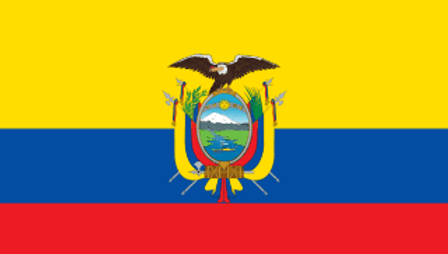
In early 2026, Ecuador is in a state of high-stakes security crisis and political transition. President Daniel Noboa continues to govern under an "internal armed conflict" declaration, prioritizing a militarized response to narco-violence. While the government highlights a drop in poverty and a "battle for opportunities," human rights watchdogs are sounding alarms over the erosion of due process and the normalization of emergency rule.
1. Permanent State of Emergency and Militarization
Since early 2024, Ecuador has operated under recurring 60-day states of emergency. On December 31, 2025, President Noboa renewed these measures for nine provinces, including the capital, Quito.
Suspension of Rights: The current decrees suspend the right to the inviolability of domicile and correspondence. This has allowed the military to conduct thousands of raids without warrants.
Extrajudicial Killings: Human Rights Watch and the Public Prosecutor’s Office have documented a "spike" in possible extrajudicial executions. In late 2025, 16 military members were charged in connection with the disappearance and death of four children in Guayaquil.
Expansion of Judicial Powers: Following a late 2025 push for military-led security, the government is increasingly using military courts or "urgent economic initiatives" to bypass traditional legislative hurdles.
2. Prison Crisis and Torture
The prison system remains the epicenter of the conflict between the state and criminal gangs like Los Lobos and Los Choneros.
Military Control: Since January 2024, the military has managed major penitentiaries. UN experts and the IACHR report that inmates are frequently held incommunicado, with documented cases of beatings, electric shocks, and the deprivation of food and medical care.
Continued Violence: Despite militarization, mass killings persist. A New Year’s Eve massacre in Manta and a major riot in Machala in late 2025 claimed dozens of lives, proving that gangs still exert significant "internal" control.
3. Indigenous Rights and "Extractive Projects"
The relationship between the state and the indigenous movement (CONAIE) has reached a breaking point in early 2026.
Mining vs. Consent: In February 2026, CONAIE filed legal challenges against a new "Mining and Energy" bill. Leaders argue the law allows for large-scale extraction in the Amazon and the Highlands without the Prior, Free, and Informed Consultation required by the Constitution.
Criminalization of Defenders: Human rights defenders protecting water sources in provinces like Bolívar face increasing criminal prosecution. In late 2025, at least six environmental activists were sentenced to prison terms for their involvement in anti-mining protests.
4. Freedom of Expression and "Social Media Discipline"
A new legislative battle is unfolding in January and February 2026 regarding how public officials are criticized.
The "Social Media Bill": A proposed reform to Article 396 of the Criminal Code seeks to punish those who use "hostile or aggressive expressions" on social media with up to 30 days in prison. Press groups warn this is a "shield" for corrupt officials to silence investigative journalists.
Stigmatization: President Noboa has publicly labeled critical judges and human rights activists as "unpatriotic" or "allies of terrorists," creating a climate of fear for those documenting security force abuses.
5. Migration and "Circular Mobility"
Ecuador has introduced significant reforms to its Human Mobility Law in early 2026 to manage both the influx of refugees and its own diaspora.
New Migration Principles: The 2026 reforms focus on "circular migration," promoting temporary work abroad for Ecuadorians while attempting to regularize the status of hundreds of thousands of Venezuelans.
Contemporary Slavery: In January 2026, UN experts highlighted that the state has failed to pay reparations to victims of "slavery-like conditions" at the Furukawa plant (abaca plantations), despite a Constitutional Court order. Many survivors remain unemployed and are currently facing eviction.