Suriname
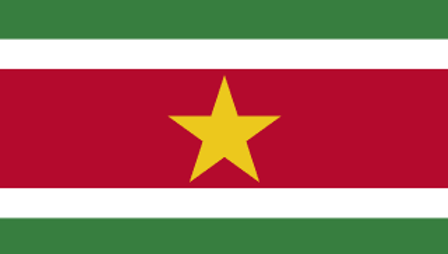
As of February 2026, Suriname is navigating a historic political transition following the May 2025 general elections. The country is currently under the leadership of its first female president, with human rights efforts focused on balancing an upcoming oil-led economic boom with the long-standing demands of Indigenous and Afro-Surinamese communities.
1. Political Milestone: The First Female President
The most significant development in late 2025 and early 2026 is the change in executive leadership.
Jennifer Geerlings-Simons: Following the May 2025 elections, which resulted in a near-deadlock between the ruling VHP and the NDP, Geerlings-Simons was elected President by the National Assembly in June 2025. She is the first woman to hold the office in Suriname's history.
Coalition Governance: The NDP formed a broad coalition with five smaller parties to secure the required two-thirds majority (34 seats). This shift marks a return to power for the NDP, which has traditionally favored economic nationalism and social spending.
Democratic Stability: Despite operational challenges and recounts in some districts, international observers from the OAS and CARICOM described the 2025 elections as peaceful and transparent.
2. Indigenous and Tribal Land Rights
Suriname remains the only country in South America that does not legally recognize the collective land rights of its Indigenous and Tribal (Maroon) peoples, a major point of tension in 2026.
Legislative Stagnation: A Draft Act on Collective Rights was submitted to Parliament in late 2025, but as of February 2026, it has not yet been promulgated. Indigenous groups, including the OIS, have criticized the draft for being formulated without "meaningful consultation."
Environmental Threats: The lack of legal title makes Indigenous lands vulnerable to illegal gold mining and logging. In early 2026, Maroon communities in the interior reported increased mercury contamination in water sources, directly impacting their right to health and food sovereignty.
UN Scrutiny: In February 2026, the UN Human Rights Committee is scheduled to adopt a "list of issues" for Suriname, with land rights and the "structural racism" faced by people of African descent expected to be high priorities.
3. LGBTQ+ Rights: Landmark Court Ruling
The legal landscape for LGBTQ+ individuals changed dramatically in early 2025, though social implementation remains slow.
Marriage Recognition: On February 13, 2025, a district court judge ruled that the state must register same-sex marriages performed abroad. The judge found that current laws prohibiting such registration were in conflict with the American Convention on Human Rights.
Workplace Protections: The Employment Equal Treatment Act (2022) is now in full force in 2026, providing the first explicit statutory protection against workplace discrimination based on sexual orientation and gender identity.
Gender Recognition: Since 2022, transgender individuals have been able to change their legal gender on birth certificates via court order, though the process still requires proof of "permanent" medical transition, which activists argue is an unnecessary barrier.
4. Women’s Rights and "Rural Empowerment"
The Geerlings-Simons administration has made gender parity a centerpiece of its 2026 agenda.
Economic Initiative: In late 2025, the government launched a joint program with UN Women to address the "feminization of poverty" in rural areas. The initiative supports Indigenous and Maroon women in transitioning to small-holder "agri-preneurship."
Domestic Violence: Despite constitutional equality, gender-based violence (GBV) remains a "shrouded" crisis. A 2025 study found that nearly 30% of women in Suriname have experienced intimate partner violence.
Digital Violence: Following a regional trend, the government began drafting the Digital Safety Act in January 2026 to combat the rise of online harassment and non-consensual deepfakes targeting women in public life.
5. Media Freedom and Transparency
Suriname’s media environment is generally free, but "institutional bottlenecks" persist in 2026.
Access to Information: Suriname still lacks a formal "Freedom of Information" law. As of February 2026, the new government has promised to improve transparency, but journalists report that access to data regarding the GranMorgu offshore oil project remains highly restricted.
Safety of Journalists: While the assault on journalist Jason Pinas in 2021 led to convictions for guards, the 2025/2026 period has seen a rise in "verbal intimidation" of reporters by high-ranking officials during press conferences.